Is your Gallatin Gateway dream home sleek and glassy or warm with timber and stone? Choosing between mountain contemporary and modern rustic affects how your home looks, lives, and lasts in a high-elevation Montana climate. You want the views, the comfort, and a smart long-term investment. This guide breaks down the styles, the materials that perform here, maintenance and insurance nuances, and how to vet listings with confidence.
Let’s dive in.
Mountain contemporary at a glance
Visual cues
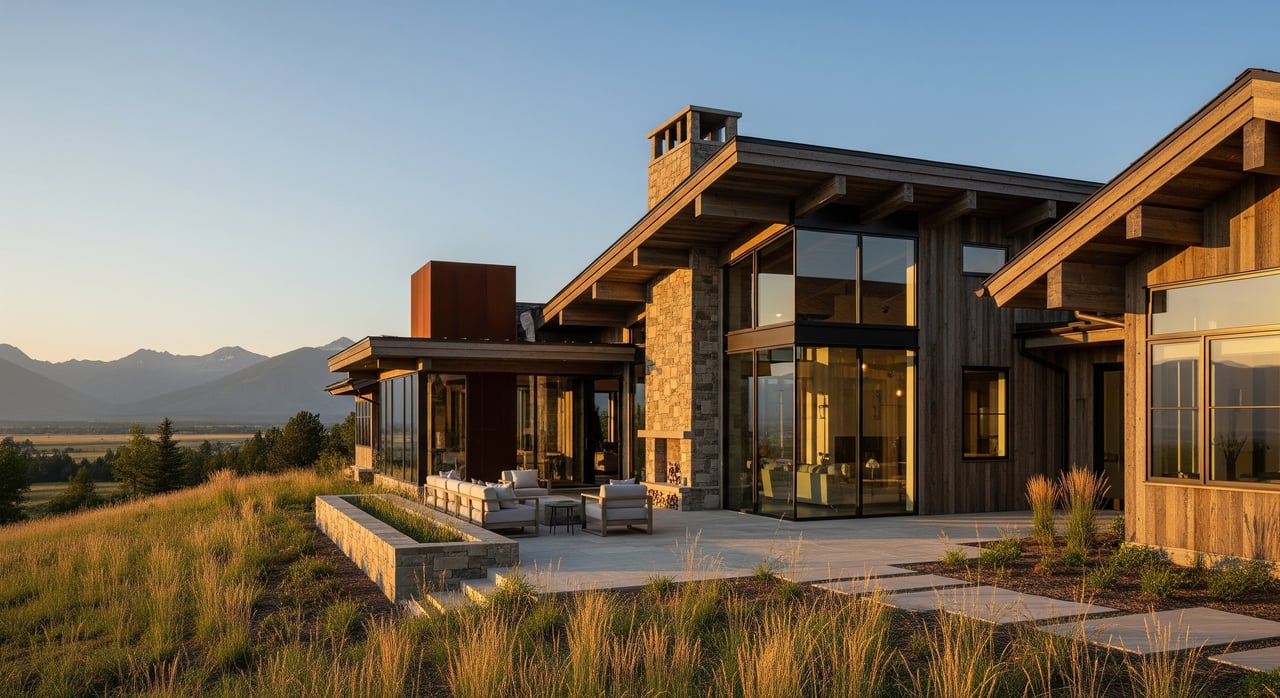
Mountain contemporary favors clean geometric forms, large glass walls, and simple rooflines with deep overhangs. You often see steel, concrete, metal cladding, and limited warm wood accents that highlight the structure without feeling heavy. The aesthetic is streamlined and view-forward.
How it lives
These homes typically feature open floor plans, high ceilings, and sliding walls that connect to decks and patios. Interiors are bright and minimal, with the landscape acting as artwork. The openness can feel airy and calm, especially when oriented to capture mountain and valley views.
Trade-offs in this climate
Large glazing is beautiful but must be high performance to avoid heat loss and glare. Open volumes need well-zoned heating to stay comfortable during cold snaps. Roofs should be detailed for snow shedding, with snow guards over entries and walkways, and the envelope benefits from meticulous air sealing and insulation.
Modern rustic at a glance
Visual cues
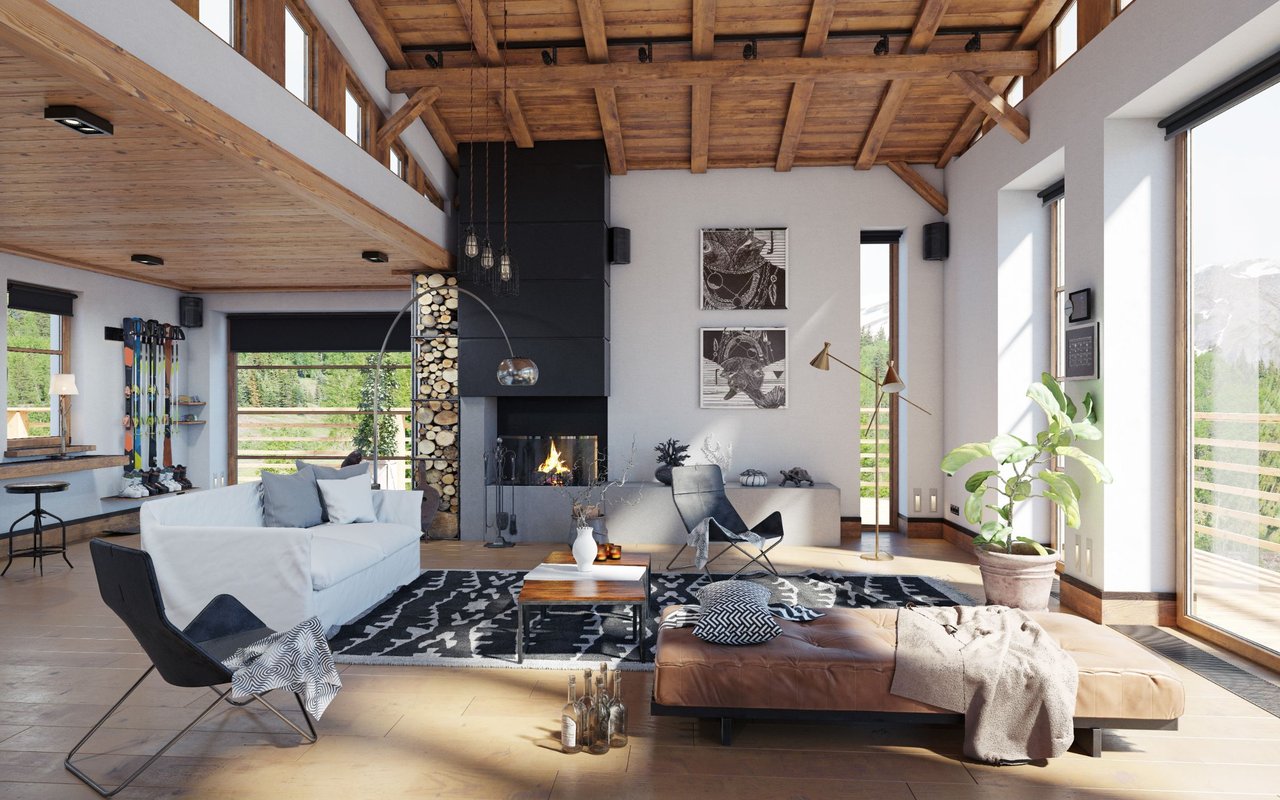
Modern rustic blends contemporary lines with exposed timbers, reclaimed or dressed wood, stone hearths, and metal accents. It delivers warmth and texture without heavy ornament. Detailing tends to be refined, letting natural materials take center stage.
How it lives
Interiors feel cozy and layered, often with a focal fireplace, built-ins, and a functional mudroom for boots and gear. Spaces are defined but not cramped, and materials hide daily dust and wear. It suits acreage and ranch lifestyles where transitions from outdoors to in are part of the rhythm.
Trade-offs in this climate
Wood is hygroscopic, so stable indoor humidity helps limit swelling and contraction. Exterior wood needs regular staining or sealing to resist UV and moisture. If a home uses wood shakes, wildfire exposure and insurance availability become important to evaluate.
Materials that matter in Gallatin Gateway
Roofing priorities
- Metal roofing performs well for snow shedding, longevity, and ice-dam resistance when paired with proper underlayment and ventilation. Add snow guards above doors, garages, and decks.
- Asphalt shingles are budget-friendly but can age faster under high UV and heavy snow loads.
- Wood shakes provide a classic look but are combustible and maintenance-intensive. In wildfire-prone areas, they are often discouraged or restricted.
Key takeaway: regardless of roof type, focus on underlayment quality, attic ventilation, and eave detailing to prevent ice dams.
Siding and exterior cladding
- Stained or painted wood offers authentic rustic character but needs routine maintenance to withstand UV, moisture, and freeze–thaw cycles.
- Engineered wood and fiber-cement mimic wood with less upkeep and better dimensional stability when flashed correctly.
- Metal panels and composite cladding align with contemporary design and resist rot and insects, but require attention to thermal bridging and insulation.
- Stone at bases, chimneys, and fireplaces is durable and helps visually anchor the structure.
Windows and doors
- Large glazing belongs to mountain contemporary, but you should ask for double or triple glazing with low-E coatings and thermally broken frames. Proper flashing is essential.
- South-facing glass can work well for passive winter gains, but shading, overhangs, or low-solar-gain glazing helps with summer control.
- Exterior doors should be insulated and well weatherstripped to perform in subzero conditions.
Foundations, slabs, and frost
- Deep freezes call for frost-protected shallow foundations or engineered footings. Insulate slab edges and condition or seal crawlspaces to reduce heat loss.
- Driveways and patios should be designed with drainage to limit frost heave.
Insulation, air sealing, and HVAC
- High insulation and meticulous air sealing support comfort in open-plan homes and help stabilize humidity for wood-rich interiors.
- Radiant floors and efficient hearths are popular and comfortable. Zone heating is valuable for tall volumes.
- Heat-recovery or energy-recovery ventilation improves efficiency and indoor air quality, and helps manage humidity.
Fire and ember resistance
- Ember-resistant vents, noncombustible gutters, and defensible space reduce wildfire vulnerability. Material choices for roofs and siding can influence both safety and insurance.
- For wood-forward rustic designs, consider treated or fire-resistant products and landscaping that limits ember ignition.
Maintenance and insurance essentials
Routine care by style
- Mountain contemporary: focus on glass seal integrity, metal roof inspections, deck flashing, and right-sized mechanical systems for large spaces.
- Modern rustic: plan for periodic wood re-staining or sealing, chimney and hearth service if wood-burning, and close attention to roofs if shakes are present.
Both styles benefit from seasonal routines: clear snow and ice thoughtfully, inspect roofs and gutters after winter, refresh sealants around windows and doors in spring, and check ventilation and insulation before heating season.
Wildfire exposure and premiums
Material selections and proximity to wildfire zones can affect insurance availability and cost. Wood shake roofs and combustible siding can raise premiums or face restrictions. Metal roofs, ember-resistant vents, and defensible space practices can help. Obtain quotes early and ask local agents about material surcharges, wildfire considerations, and any premium reductions for mitigation upgrades.
Rules, permits, and design guidelines
Gallatin County building codes, wildfire overlay requirements, and subdivision or HOA design rules may limit exterior materials, roof profiles, or colors. Confirm property-specific guidelines with Gallatin County Planning and Development and review HOA CC&Rs before making changes.
Resale and cost lens
Buyer appeal
- Mountain contemporary often attracts design-conscious buyers who value clean lines and panoramic glass.
- Modern rustic draws those seeking a lodge-like ambiance with tactile natural materials.
Craftsmanship matters. Quality execution in either style has a stronger impact on value than the label itself. Fit to site, material longevity, and thoughtful details will show up in buyer feedback and offers.
Upfront vs lifecycle costs
- Heavy timber and handcrafted stone raise initial build costs. High-end contemporary elements like large glass systems and custom steel can be costly too.
- Over time, metal roofs and composite or fiber-cement cladding typically lower maintenance outlays compared to wood shakes or fully wood-clad exteriors.
Acreage and context
On estate lots and acreage, materials that weather gracefully and match the landscape elevate curb appeal. In Gallatin Gateway, buyers often weigh views, privacy, trail access, and practical proximity to Bozeman. Homes that balance these with durable materials and sensible operations tend to stand out.
Touring checklist for buyers
Bring this short list to showings:
- Roof type and age; look for snow guards and ice-management details.
- Siding material; note the last maintenance date if available.
- Window glazing type; watch for failed seals or condensation between panes.
- Evidence of water intrusion at foundations, decks, or eaves.
- Presence of HRV or ERV; ask for insulation documentation.
- Wildfire mitigation measures and defensible space around the home.
Smart questions to ask
- What is the roof type, age, and service history?
- How often have exterior finishes been maintained, and is there a written maintenance log?
- What are the window specifications and ages? Any recent replacements?
- What heating systems are in place and how are spaces zoned?
- Are there HOA or county restrictions on exterior materials or colors?
- Any known issues with water intrusion, foundation movement, or pests? Any recent insurance claims?
Value-adding upgrades
- Upgrade to high-performance double or triple glazing when feasible.
- Install ember-resistant vents and noncombustible gutter guards.
- Add a mudroom with boot storage and drying racks for acreage living.
- Install snow guards and consider heat-trace at vulnerable roof edges.
- Swap high-maintenance wood siding for composite or fiber-cement that mimics the desired look.
Finding the right fit
Use precise keywords when you search: “mountain contemporary,” “mountain modern,” “modern rustic,” “timber frame,” “refined rustic,” and “contemporary mountain.” Filter by lot size, year built, roof type, window features, and construction materials. For Gallatin Gateway, include the place name and consider drive times to Bozeman or favorite trailheads. Local MLS portals, brokerage websites, and national home search sites can help you narrow the field without missing hidden gems.
Visualizing both styles
- Mountain contemporary image cues: low to mid-pitch or flat roofs with deep overhangs, metal or composite cladding, and expansive insulated glass framing a valley view.
- Modern rustic image cues: exposed heavy timbers, warm wood siding, and a floor-to-ceiling stone fireplace; look for a practical, well-organized mudroom.
Caption ideas:
- Mountain contemporary: large insulated glazing, metal cladding, clean lines; prioritize high-performance windows and roof snow management.
- Modern rustic: heavy timber and stone focal points; prioritize wood maintenance and wildfire-resistant measures.
Ready to compare in person?
Whether you lean sleek and view-forward or warm and timbered, the right guidance helps you balance design with durability, maintenance, insurance, and long-term value in Gallatin Gateway. For tailored advice, private tours, and a strategy that fits your lifestyle, connect with SHAWNA WINTER.
FAQs
What defines mountain contemporary in Gallatin Gateway?
- Clean lines, large high-performance windows, simple roof forms, and a mix of steel, concrete, and limited warm wood accents designed to frame views and shed snow efficiently.
How is modern rustic different from a traditional log home?
- Modern rustic blends exposed timbers and stone with refined detailing and simpler window patterns, avoiding heavy ornament while preserving warmth and texture.
Which roof materials perform best in snowy Montana winters?
- Standing seam metal is favored for longevity and snow shedding, while asphalt shingles have shorter lifespans and wood shakes raise wildfire and maintenance considerations.
Do large glass walls hurt energy performance?
- Not when specified correctly; double or triple glazing with low-E coatings, thermally broken frames, and good air sealing can deliver comfort with lower heat loss.
How does wildfire risk affect material choices and insurance?
- Combustible roofs and siding can raise premiums or face restrictions; ember-resistant vents, metal roofs, and defensible space can improve insurability and safety.
What should I verify before altering a home’s exterior?
- Confirm Gallatin County requirements and any HOA design guidelines for materials, colors, and roof profiles, and consult your insurer about impacts on coverage and premiums.