If you want room to breathe, ride, and invest in a true Montana lifestyle, Gallatin Gateway deserves a close look. This is a market where scenic acreage, river frontage, and horse-ready properties can offer a rare mix of privacy and proximity to Bozeman and Big Sky. The details matter here, though, because land use, utilities, covenants, and river-related risks can vary sharply from one parcel to the next. Let’s dive in.
Why Buyers Look at Gallatin Gateway
Gallatin Gateway sits about 12 miles southwest of Bozeman on the Gallatin River at the mouth of the canyon on the road to Yellowstone National Park. That setting gives you a rural feel with convenient access to the broader Bozeman-Big Sky recreation corridor.
Growth in the area helps explain the continued interest in acreage. Gallatin County describes itself as the most populated and fastest-growing county in southwest Montana, and county population estimates reached 128,740 in July 2025, up 8.2% from April 2020. For buyers, that often means land close to lifestyle amenities remains highly sought after.
What Acreage Inventory Looks Like
Gallatin Gateway does not offer a one-size-fits-all land market. Recent listing samples show parcels ranging from under an acre to more than 40 acres, with a wide spread in improvements, restrictions, and intended use.
That range is especially important if you are shopping for horses. Some properties already include features like fenced pasture, dry lots, horse stalls, outdoor riding areas, round pens, shops, or water rights, while others are more of a blank slate. You may also find mixed-use or multi-structure properties where wells, septic systems, and additional parcels create extra opportunity, or extra complexity.
The key takeaway is simple: do not assume two acreage properties in Gallatin Gateway will function the same way. A beautiful parcel may still have zoning limits, covenant restrictions, utility hurdles, or siting issues that affect your plans.
How Much Land You Need for Horses
If horses are part of your plan, Gallatin County zoning is one of the first things to review. The county code draws a clear line between personal equestrian use and commercial equestrian use.
A personal equestrian facility must be secondary to the residence and does not include large public events. Under the county code, the minimum parcel size for personal equestrian use is 2 acres.
A commercial equestrian facility is treated differently. If the property is intended for public-facing activities such as boarding, training, lessons, clinics, shows, or camps, the code requires a minimum of 10 acres.
That distinction matters if you want more than a few horses for private enjoyment. It matters even more if you are considering income-producing horse use, guest programming, or a larger facility footprint.
Zoning Matters Parcel by Parcel
Gallatin County’s zoning framework can support rural living, agriculture, and equestrian use, but the rules depend on the parcel. The county code says the A-S district is intended for agricultural activities and rural residential uses on larger tracts, while the R-S district is intended for residential country estates and allows agricultural activities on 2 acres or greater.
The same code explicitly recognizes equestrian facilities and accessory dwellings. That can be helpful if you want a barn, riding arena, guest space, or a property that supports a more flexible estate layout.
Still, zoning should always be confirmed for the specific parcel you are considering. County planning tools, the Future Land Use Map, and the Land Use Profile can help you understand both current conditions and how the county views future development suitability.
Barns, Shops, and Accessory Dwellings
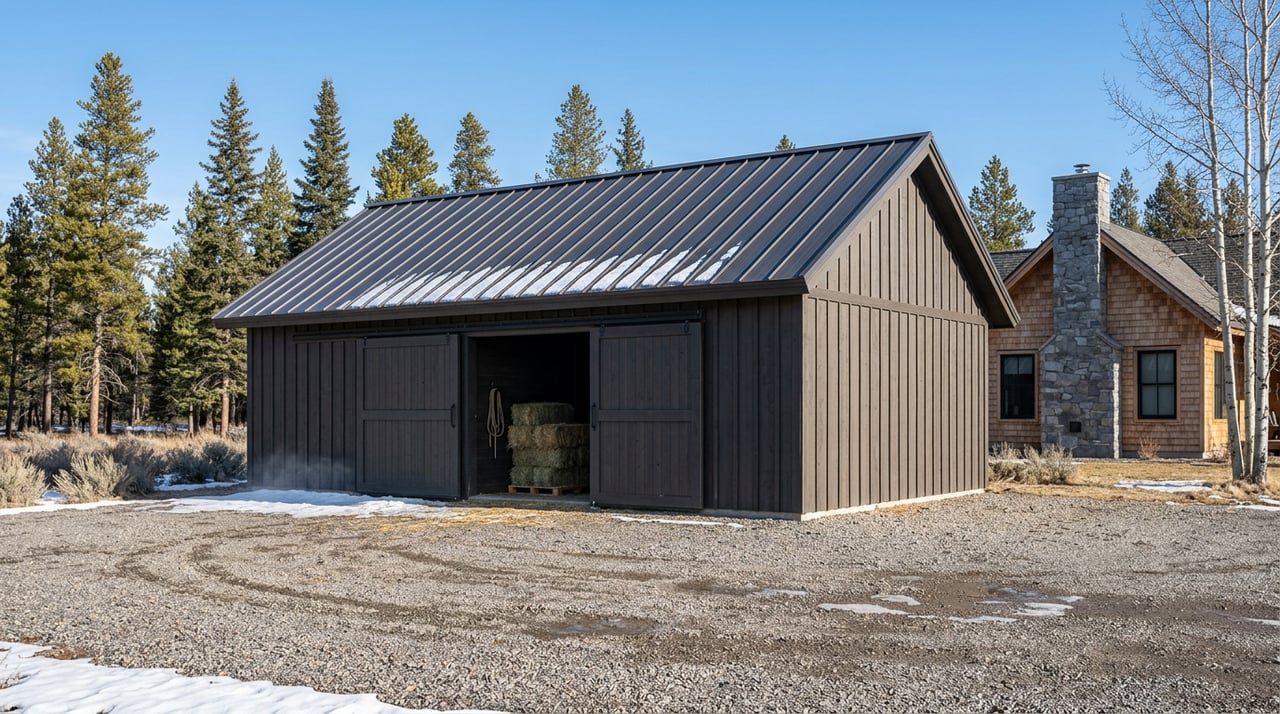
One of the most common buyer questions is whether you can add a barn, shop, or accessory dwelling after closing. In Gallatin Gateway, the answer is often yes in concept, but the actual feasibility depends on code, setbacks, utility capacity, and any recorded covenants.
Gallatin County’s code defines accessory buildings broadly. That includes garages, personal-use shops, barns, riding arenas, and standalone accessory dwellings.
The placement rules are important. Accessory buildings generally cannot be located in required front or side setbacks, and detached structures must be at least 6 feet from the principal building.
If a structure is meant to enclose livestock, the rules get more specific. Barns, stables, pens, sheds, and similar structures generally must be at least 50 feet from any human-occupancy structure, except for pastures.
For buyers with a long-term vision, this is where early planning pays off. A parcel may have enough acreage on paper but still present site-layout challenges once you account for setbacks, topography, existing improvements, and water or septic constraints.
Wells, Septic, and Rural Utilities
Utilities can shape both your purchase decision and your future budget. Many homes outside city limits rely on private wells, but properties inside a water and sewer district must connect to that system.
There is another layer to watch for. If a parcel is in a Controlled Ground Water Area, a permit from the Montana Department of Natural Resources and Conservation is required to drill a well.
Wastewater is also regulated. Gallatin County Environmental Health requires a permit before a wastewater treatment system is installed.
The good news is that public map tools are available through Gallatin County and the Gallatin Local Water Quality District. These tools can help you review groundwater data and wastewater-permit information during due diligence.
Covenants Can Be Just as Important
Zoning is only part of the picture on rural land. Recorded covenants may affect livestock, fencing, accessory-building use, and other property rights or limitations.
Gallatin County notes that covenants are available through the Clerk and Recorder. That makes covenant review a must for acreage buyers, especially if you are purchasing with plans to build out horse facilities, add structures, or adjust fences and access.
In practice, this means you should review both public regulations and private restrictions before you move forward. A property can appear horse-friendly at first glance but still carry covenant language that limits how you use it.
Riverfront Beauty Comes With Extra Checks
River-adjacent acreage can be especially appealing in Gallatin Gateway, but scenic frontage should never be your only lens. Buyers should also review floodplain status, channel migration exposure, insurance implications, and building siting.
Gallatin County provides a zoning and floodplain mapper, and the Gallatin Local Water Quality District notes that channel-migration-zone maps are complete for the East and West Gallatin Rivers. This matters because rivers can move laterally across floodplains over time.
If you are considering land along the Gallatin River, think beyond the view. You want to understand where future movement, water, or mapping constraints could affect use, insurability, and long-term improvements.
There is also an access point buyers sometimes miss. Montana stream-access law allows public use of rivers and streams up to the ordinary high-water mark. In other words, river frontage can still be very special, but it is not the same as complete private control of the water’s edge.
Recreation Adds to the Appeal
Part of Gallatin Gateway’s draw is what surrounds it. The area offers convenient access to the Gallatin River, Yellowstone travel routes, and nearby public recreation areas such as Spire Rock Campground, Spanish Creek Picnic Area, and Kirk Wildlife Refuge fishing access.
The Gallatin River drainage is widely known for trout fishing, and much of the river is bordered by public lands. For buyers who value outdoor access, that can add meaningful lifestyle appeal to an acreage purchase.
Horse-oriented recreation is also part of the picture. In the broader Custer Gallatin National Forest, selected trails support horse riding and other multi-use recreation. Buyers should remember that access conditions can change due to restoration work, closures, or management needs, and that Montana’s bear-country precautions apply in these settings.
A Smart Buyer Checklist
Before you write an offer on acreage or an equestrian property in Gallatin Gateway, focus on the items that most often affect usability and future value:
- Confirm the parcel’s zoning district and allowed uses
- Verify whether your horse use is personal or commercial under county code
- Review setback rules for barns, shops, arenas, and accessory dwellings
- Check whether the property uses a private well and septic system or must connect to a district system
- Determine whether the parcel is in a Controlled Ground Water Area
- Review wastewater permits and groundwater mapping data
- Pull and read recorded covenants
- Check floodplain and channel-migration-zone exposure for river-adjacent land
- Study site layout, topography, and existing improvements before assuming you can expand
This kind of due diligence is where local guidance can make a real difference. In a market like Gallatin Gateway, the best opportunities often come from understanding not just what a property is today, but what it can realistically support tomorrow.
If you are exploring Gallatin Gateway acreage or equestrian homes and want clear, discreet guidance, SHAWNA WINTER offers thoughtful representation rooted in deep mountain-market knowledge and a high-touch approach.
FAQs
How much land do you need for horses in Gallatin Gateway?
- Under Gallatin County code, a personal equestrian facility requires at least 2 acres, while a commercial equestrian facility requires at least 10 acres.
Can you add a barn or shop on Gallatin Gateway acreage?
- Possibly, but barns, shops, riding arenas, and other accessory buildings are regulated by county code, and setbacks, parcel layout, utilities, and covenants all need to be reviewed.
Do Gallatin Gateway acreage properties usually need well and septic?
- Often yes on rural parcels, although properties inside a water and sewer district must connect to that system, and wastewater treatment systems require a permit before installation.
Are covenants important for Gallatin Gateway equestrian property?
- Yes. Recorded covenants can affect livestock, fencing, accessory-building use, and other property rights, so they should be reviewed early in your due diligence process.
Is Gallatin River frontage fully private on Gallatin Gateway property?
- No. Montana stream-access law allows public use up to the ordinary high-water mark, so river frontage should be evaluated with both privacy expectations and legal access rules in mind.
What should you check on riverfront acreage in Gallatin Gateway?
- Review floodplain status, channel-migration-zone exposure, insurance considerations, and building siting, in addition to the property’s views and recreation access.